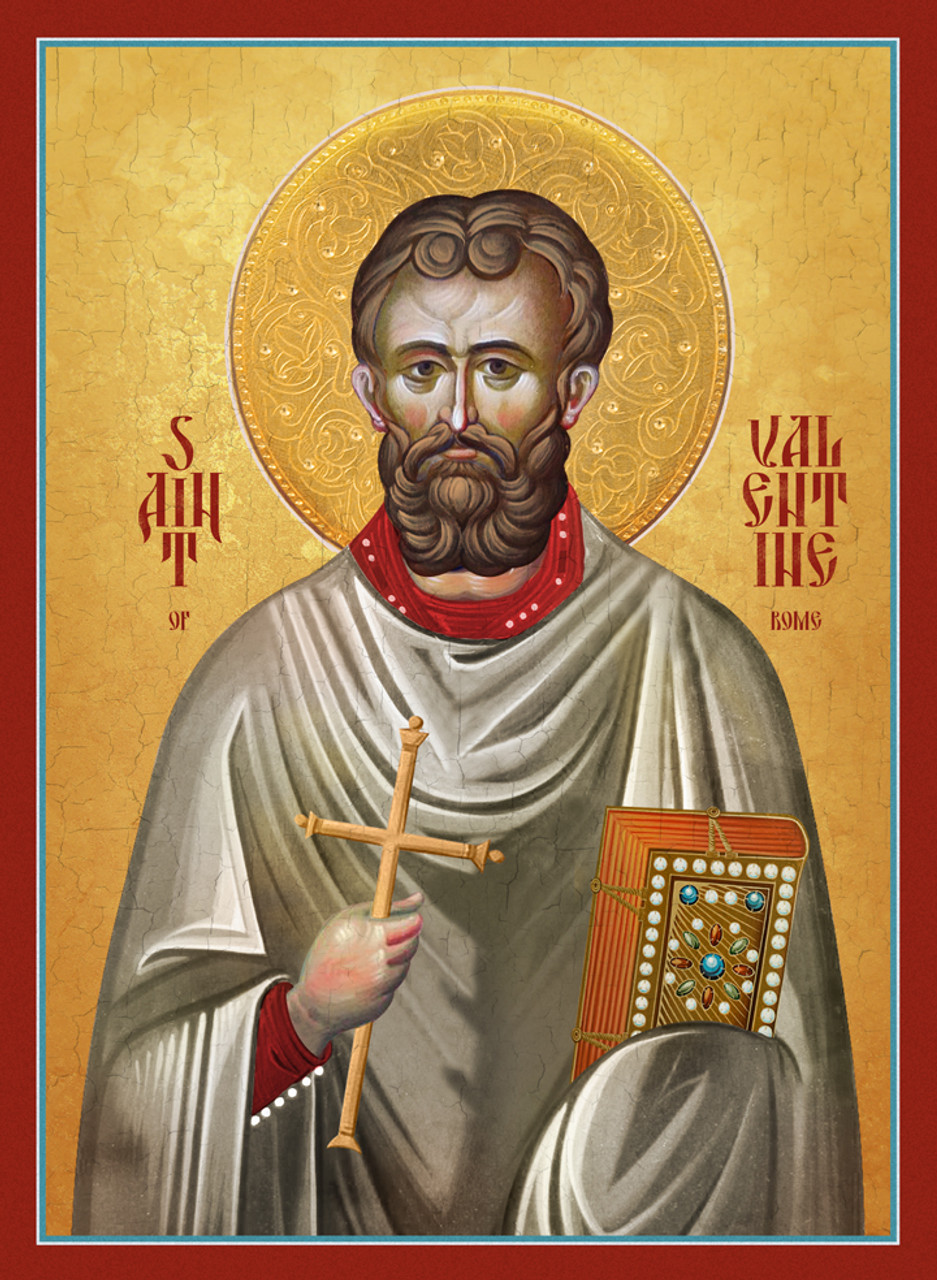
Historical records from the early church are limited, yet traditions consistently place Valentine in the Roman Empire during a period of Christian persecution. He is believed to have been executed during the reign of Emperor Claudius II Gothicus, with his death remembered on February 14. Early Christian communities preserved his memory as a martyr buried near Rome, and his feast day became part of the church calendar long before it was associated with romance.
Some accounts describe Valentine as a priest serving in Rome, while others identify him as the bishop of Terni. Because the stories overlap so closely, many historians believe the traditions may refer to a single individual whose memory developed differently in various regions.
Over the centuries, stories surrounding Valentine expanded, shaping the enduring image recognized today. One well-known legend tells of Valentine secretly performing marriages for young couples during a time when military service discouraged marriage. Another tradition describes him as a compassionate figure who offered spiritual encouragement to prisoners and reportedly restored sight to a jailer's daughter through prayer. According to later accounts, he sent a final message before his execution signed with the words "from your Valentine," a phrase that would echo through generations.
Other stories portray Valentine as a pastor known for acts of kindness and healing, emphasizing his reputation for compassion and courage. Though historians note that these narratives emerged long after his death and cannot be fully verified, they played a significant role in shaping how his memory was passed down through Christian communities and later embraced by popular culture.
The connection between Valentine and romantic love developed much later, particularly during the Middle Ages. Writers such as Geoffrey Chaucer linked mid-February with courtly love and the pairing of birds, helping transform the feast day into a celebration associated with romance and affection. This literary influence gradually merged with existing legends, creating the modern Valentine's Day tradition recognized today.
Despite uncertainty surrounding exact historical details, the legacy of St. Valentine remains significant. Churches across Europe preserve relics attributed to him, and artistic depictions frequently portray him as a priest or bishop offering blessings, symbolizing fidelity and compassion in the face of adversity.
The Roman Catholic Church continues to recognize St. Valentine as a saint, even though his feast was removed from the universal liturgical calendar in the twentieth century due to limited historical documentation. His story, shaped by both memory and legend, endures as a reminder of the enduring power of narrative to preserve figures whose lives inspired generations long after their passing.
Today, St. Valentine stands at the intersection of history, tradition, and cultural imagination - a martyr whose legacy has traveled far beyond the world in which he lived.


