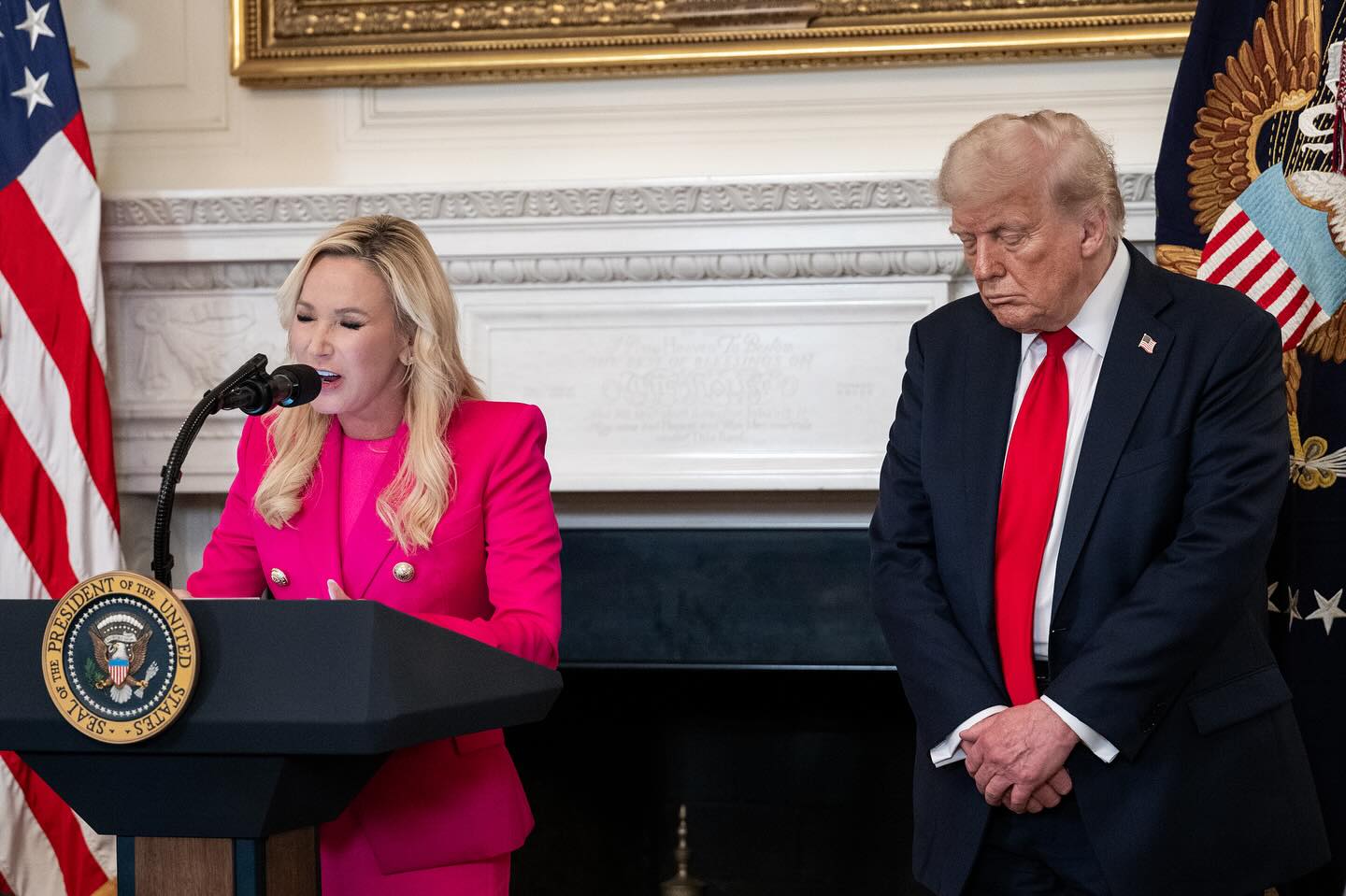
Televangelist Paula White-Cain is facing widespread backlash after remarks delivered at a private White House Easter lunch in which she drew comparisons between President Donald Trump and Jesus Christ.
The event, held on April 1 at the White House, brought together pastors, faith leaders and administration figures to mark the Easter season, which commemorates the death and resurrection of Jesus. The gathering is part of a broader tradition of faith-based observances hosted by U.S. presidents during Holy Week, often including prayer, remarks and reflections on the significance of Easter.
During her speech, White-Cain praised Trump as a "champion of faith" and credited him with advancing religious liberty both in the United States and globally. She suggested his leadership had helped restore the ability to openly worship, framing his presidency in spiritual terms.
Her remarks intensified when she drew parallels between Trump's personal and political challenges and the suffering of Jesus, referencing betrayal, accusations and perseverance. She also linked his political success to themes of resurrection and victory, language that quickly drew sharp criticism online and across media outlets.
White-Cain, who serves in the White House Faith Office and has long been a spiritual advisor to Trump, has been a prominent figure in evangelical circles and political faith outreach. Her comments, however, prompted a strong response from critics who described the comparison as inappropriate and theologically problematic, with some labeling the remarks as extreme or offensive.
The White House Easter lunch itself is typically intended as a moment of reflection on the central message of Christianity - the resurrection of Jesus Christ and the hope it represents - and has historically included bipartisan participation and a focus on unity and faith.
This year's event, however, has drawn heightened attention due to the controversy surrounding White-Cain's speech, with debate continuing over the role of faith language in political settings and the boundaries between religious expression and political endorsement.


