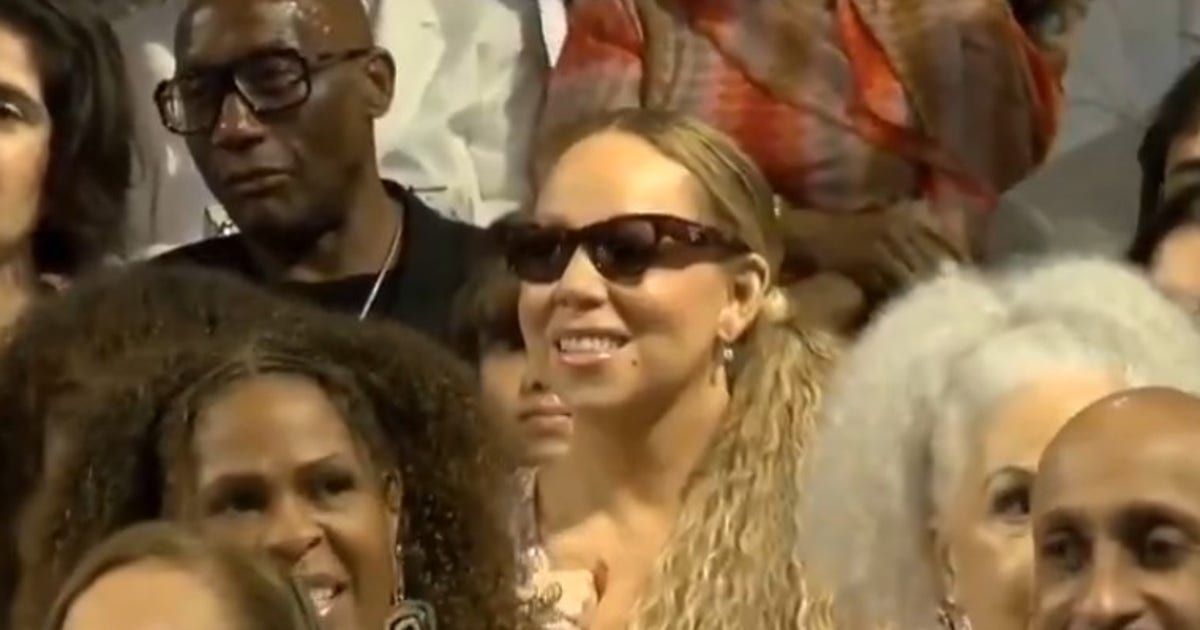
International music icon Mariah Carey marked Easter Sunday with a meaningful appearance at Ebenezer Baptist Church, joining a packed congregation for Resurrection service led by Senior Pastor and U.S. Senator Raphael Warnock. The moment brought together faith, history, and culture at one of America's most influential churches.
Carey's presence was acknowledged during the service by Warnock, who greeted her from the pulpit to a warm and enthusiastic response from attendees. The singer stood in appreciation, applauding and engaging with the congregation, reflecting a posture not of performance but participation in worship on Christianity's most sacred day.
The Easter service-celebrating the resurrection of Jesus Christ-drew a diverse and high-profile audience, underscoring Ebenezer's ongoing role as both a spiritual center and a cultural landmark. Founded in 1886, the church is globally recognized as the former pastoral home of Martin Luther King Jr., and remains deeply connected to the legacy of the Civil Rights Movement. Today, under Warnock's leadership, the church continues to bridge faith and public life, with its pastor uniquely serving in both the pulpit and the U.S. Senate.
For Carey, whose career has spanned decades at the top of the global music industry, the appearance also highlights a longstanding-if sometimes understated-connection to faith. While best known for her chart-topping pop and R&B catalogue, Carey has repeatedly woven spiritual themes into her work. Her gospel-influenced performances, most notably "Fly Like a Bird," have showcased her vocal depth alongside expressions of prayer, surrender, and dependence on God.
Those in attendance described the atmosphere as celebratory and reverent, with Easter worship marked by music, preaching, and communal reflection. Carey's presence added a unique dimension to the service, symbolizing the ongoing intersection between mainstream culture and sacred spaces-particularly within historically Black churches that have long served as anchors of both spiritual life and social transformation.
The moment also reflects a broader pattern in which public figures increasingly engage visibly with faith communities, especially during significant moments in the Christian calendar. In this case, Carey's attendance was not framed as a headline performance, but as a personal act of worship-one that resonated with many in the congregation.
As Ebenezer Baptist Church continues its historic mission into a new generation, moments like this reinforce its enduring influence-not only as a place of worship, but as a living symbol of faith, justice, and cultural unity.


