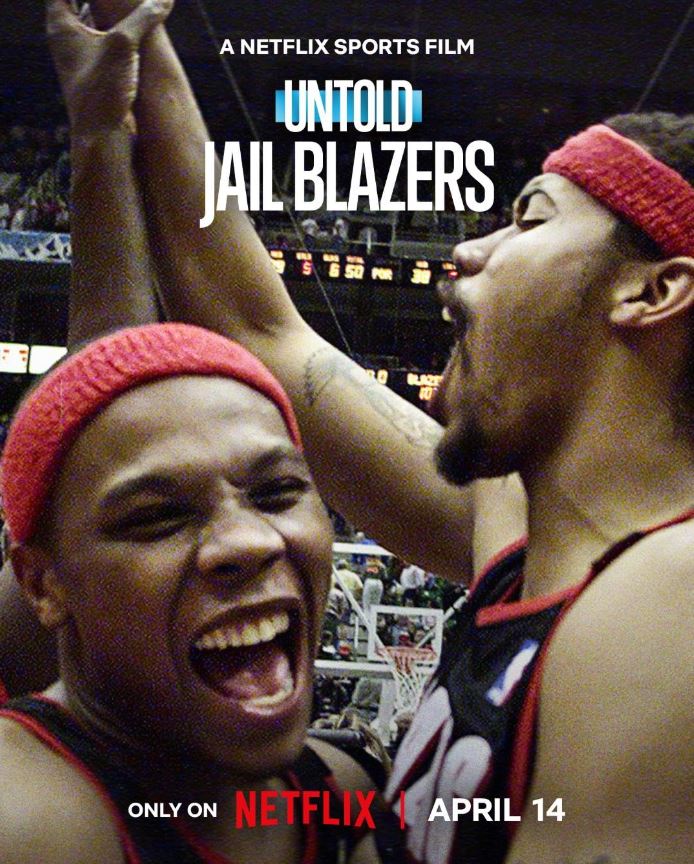
Netflix is once again digging into sports history with its latest release, "Untold: Jail Blazers," a documentary that revisits one of the most controversial-and often misunderstood-chapters in NBA history. Released on April 14, 2026, the film shines a spotlight on the early 2000s Portland Trail Blazers, a team remembered as much for its off-court issues as its undeniable on-court talent.
At the center of the documentary is a question many fans still wrestle with today: Were the "Jail Blazers" truly as dysfunctional as they were portrayed, or did the narrative spiral beyond reality? Through interviews with key figures like Rasheed Wallace, Damon Stoudamire, and Bonzi Wells, the film attempts to reframe a story that has long been defined by headlines rather than nuance.
During their peak, the Trail Blazers were one of the most talented teams in the league. They pushed the Los Angeles Lakers to a dramatic Game 7 in the 2000 Western Conference Finals and looked poised to become championship contenders for years to come. However, that promise quickly faded as the team became synonymous with controversy. Arrests, suspensions, locker room altercations, and clashes with authority led to the infamous nickname "Jail Blazers."
The documentary revisits these incidents with a more personal lens. Players share their side of the story, offering insight into how fame, pressure, and environment shaped their decisions. It also explores how media coverage-and in some cases, racial and cultural misunderstandings-may have amplified the team's negative image. For some viewers, this perspective may challenge long-held assumptions about that era.
Still, "Jail Blazers" doesn't ignore the reality of what happened. From Zach Randolph's off-court issues to Ruben Patterson's controversies and Shawn Kemp's struggles, the film acknowledges that the team's problems were real and, at times, deeply damaging. Yet it also raises an important point: how quickly success can be overshadowed when character and discipline begin to erode.
Interestingly, the documentary leans heavily on first-person storytelling, giving viewers direct access to the voices of those who lived through the chaos. While this approach adds emotional depth, some critics have noted that it leaves out stronger opposing perspectives, making the narrative feel incomplete at times. Even so, it succeeds in prompting reflection rather than simply retelling scandal.
For a faith-based audience, the story resonates on a deeper level. It's a reminder that talent alone is never enough to sustain success. Without accountability, wisdom, and a strong foundation, even the most promising paths can unravel. The rise and fall of the "Jail Blazers" quietly echoes a timeless truth: what shapes a person internally will eventually reveal itself externally.
As the documentary continues to gain attention, it invites both longtime NBA fans and new viewers to reconsider a story that was once written off too quickly. Whether it fully redeems the team's legacy or not, "Untold: Jail Blazers" succeeds in doing one important thing-it gets people talking again, not just about what happened, but about why it happened.


