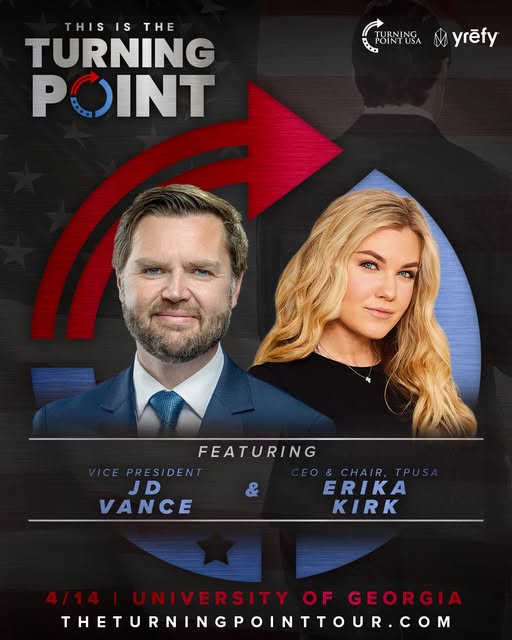
A highly anticipated TPUSA event in Georgia took an unexpected turn when Erika Kirk, the widow of Turning Point USA founder Charlie Kirk, did not appear alongside Vice President JD Vance at the University of Georgia. Her absence quickly became a major talking point, especially as the event continued under heightened security awareness and political attention.
According to Vice President JD Vance, Erika Kirk decided not to attend the April 14, 2026 event due to threats made against her in the days leading up to the gathering. Speaking to the crowd in Athens, Vance explained that the situation escalated just hours before the program began, briefly raising concerns that the entire event might need to be canceled.
"About two hours ago, I was a little worried we were going to have to cancel the event because Erika was not going to come and she was very worried about it," Vance said, adding that he personally consulted with the Secret Service before organizers ultimately moved forward with a revised format.
The TPUSA event remained scheduled, but Erika Kirk's role was replaced with a moderated discussion and student Q&A session featuring Vance. Organizers adjusted quickly to ensure the program could continue safely while respecting Kirk's decision to step back.
Erika Kirk has remained a prominent figure within Turning Point USA since the tragic death of her husband, Charlie Kirk, in 2025. His killing during a TPUSA campus event sent shockwaves through political and student communities, and since then, Erika has taken on a more visible leadership role within the organization.
That context has made her public appearances especially significant. Her decision to skip the Georgia event highlights the ongoing security concerns surrounding high-profile political gatherings, particularly those involving controversial or nationally recognized figures.
Outside the venue, the atmosphere reflected broader national tensions. The event drew large crowds of supporters alongside groups of peaceful protesters, with demonstrations focusing on political and social issues tied to the organization's mission. Despite the divided response, the event proceeded without major disruption.
While the situation centered on logistics and security, it also underscored a more personal reality. Erika Kirk's absence was not simply an organizational change-it reflected the emotional and safety considerations faced by someone still navigating public life after a deeply personal loss.
The moment also serves as a reminder that wisdom often involves stepping back when circumstances require discernment, protection, and peace over visibility.
As TPUSA continues its national tour, questions remain about how future events will balance public engagement with safety protocols. For now, Erika Kirk's absence in Georgia stands as one of the most notable moments of the tour so far.


