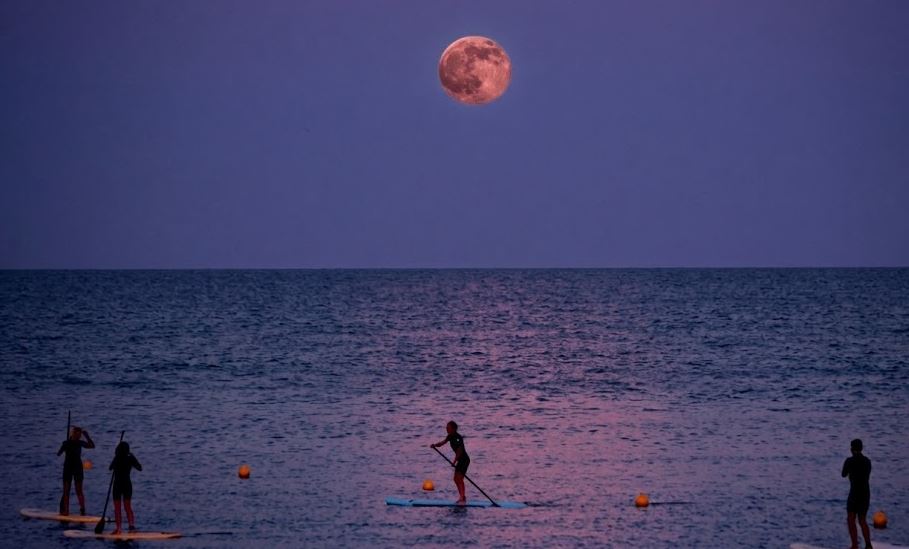
It doesn't happen every month - a full moon with a name that makes you want to step outside and look up. The June 2026 Strawberry Moon is rising, and if you've been meaning to spend a quiet moment under the night sky, this is your sign.
June's full moon will reach peak illumination on June 29 at 7:56 PM Eastern Time. In UTC/GMT, that's 23:57 on June 29 - which means for the UK, Europe, China, and much of Asia, the calendar date flips to June 30.
Here's when to watch, by region:
- United States: Monday, June 29 - 7:57 PM EDT / 6:57 PM CDT / 4:57 PM PDT
- UK/Europe: Tuesday, June 30 - 12:57 AM BST
- Australia: Tuesday, June 30 - 9:56 AM AEST (though best viewing is the evening of June 29 or June 30 after sunset)
- Philippines / Singapore / Malaysia: Tuesday, June 30 - 7:57 AM PHT/SGT
- Japan / Korea: Tuesday, June 30 - 8:57 AM JST/KST
The moon will look full on the nights around June 28, June 29, and June 30 - so you have more than one good chance to observe it. For the best view, look east around sunset and search for the moon rising along the horizon.
Why is it called the Strawberry Moon?
The name comes from Native American Algonquian tribes who used the June full moon to mark the ripening of wild strawberries ready to be gathered.
Don't expect a pink or red moon, though - the moon doesn't actually glow pink or red despite the name. It may take on warm golden or orange tones as it rises near the horizon.
What makes this one special?
This year's Strawberry Moon is actually a micromoon - the last of three full micromoons in a row in 2026, appearing at its farthest point from Earth.
For those in Australia and the Southern Hemisphere, it will be the highest full moon of the year, sitting farthest from the horizon and closest to the zenith overhead.
Look to the southeastern horizon at sunset on June 29 to find the Strawberry Moon climbing into the summer sky, embedded among the stars of the constellation Sagittarius.
Whether you're watching from your backyard or a rooftop, take a moment to pause under the glow of God's creation. The heavens are still declaring His glory - one full moon at a time. (Psalm 19:1)


