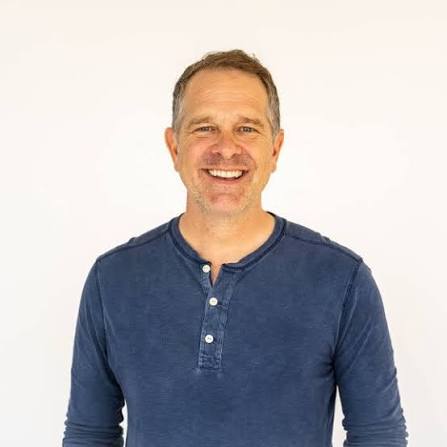
For countless worship leaders, Sunday mornings can feel like an endless cycle of rehearsals, criticism, and exhaustion. But Robbie Seay has a simple message for anyone wondering if it's time to walk away: don't quit.
Appearing on the latest episode of the Worship Probs Podcast, the longtime worship leader and Executive Vice President of Leader Development and Content at The Worship Initiative opened up about the realities of ministry, admitting that even after decades of serving the church, he has wrestled with whether he should keep going.
"There are plenty of times I thought, 'Should I be doing something else? Does this matter?'" Seay confessed. "Some people think I'm great at this. Others think I'm the worst worship leader ever. Some Sundays are amazing. Some Sundays are the worst. But as long as the Lord has you serving the church, keep going."
The candid conversation offered an unusually honest glimpse behind the scenes of worship ministry, with Seay explaining that the public only sees the few songs performed on Sunday. What they don't see are the rehearsals, planning meetings, team conflicts, pastoral care, budgeting, and countless hours of preparation that happen during the rest of the week.
Looking back, Seay recalled meeting David Crowder during their college years at Baylor University before the two became involved in a church plant. It was there, he said, that he discovered ministry was far more demanding than he had imagined.
"Be ready to get your hands dirty," he said. "This is hard work."
Today, Seay channels those experiences into The Worship Initiative, the ministry founded by Shane & Shane. What began as a small gathering of just a few dozen worship leaders has grown into a worldwide ministry serving around 11,000 worship leaders, providing training, community, and practical resources for churches.
But Seay believes the church's next challenge isn't just training worship leaders-it's helping entire congregations rediscover their voices.
He pointed to the ministry's rapidly growing Sing daily devotional, which combines Scripture, prayer, and simple worship songs to encourage believers to sing throughout the week rather than only on Sundays. According to Seay, the initiative has now reached more than half a million people, with approximately 3,000 to 4,000 new users joining every day.
Some of the most moving testimonies, he shared, come from people who have always insisted they "aren't singers."
One story involved a husband who wrote to say that after decades of marriage, he was hearing his wife sing aloud for the first time because of the daily devotionals.
"I've never heard a sweeter sound," the husband reportedly told Seay.
Throughout the interview, Seay repeatedly emphasized that congregational singing-not performance-is the true goal of worship ministry.
Reflecting on his younger years, he admitted he once spent too much energy worrying about flawless transitions, musical arrangements, and how people perceived him, rather than asking whether the congregation was actually singing.
"If I had one microphone in front of every worship leader," he said, "I'd tell them this: congregational singing matters."
For Seay, that's the measure of success-not polished performances or viral worship moments, but ordinary believers confidently lifting their voices together in praise.


