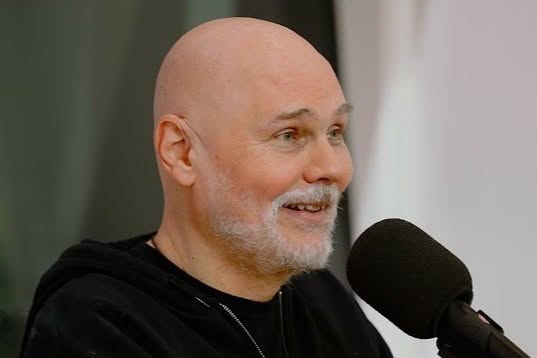
Billy Corgan is raising an uncomfortable question for an industry that celebrates personal expression: How much honesty does rock music actually welcome when an artist starts talking about Jesus? The Smashing Pumpkins frontman says he decided to speak openly about his Christian faith even if doing so carried a professional cost.
During the September 23 episode of The Magnificent Others, Corgan discussed faith and the music business with Stryper frontman Michael Sweet. Their conversation explored what happens when religious conviction becomes part of an artist's public identity-and why some musicians hesitate to let audiences see that side of them.
"I'm a Christian," Corgan said, explaining that he had made a personal decision to talk honestly about God and his belief in Jesus as his Lord and Savior. For the singer-songwriter, keeping those convictions hidden would leave fans with an incomplete picture of the person behind the music.
His reasoning puts a revealing twist on the familiar celebrity promise of authenticity. Artists routinely invite listeners into their heartbreak, anger, addictions, relationships, and private struggles. Corgan's question is why faith should become the subject that requires a separate calculation about whether honesty is commercially acceptable.
Recalling his description of God as the "third rail of rock and roll," Corgan said he understood that discussing religion could carry consequences. Nevertheless, he was prepared to accept them. His comments describe a risk he was willing to take; they do not establish that his career has suffered because of his beliefs.
That distinction matters because the most probing part of the conversation concerns anticipated rejection. How many artists remain quiet because someone has explicitly discouraged them-and how many censor themselves because they assume that fans, critics, or industry executives will react badly?
Sweet offered his own perspective, describing encounters with Christians in the music business who privately admired Stryper's openness but hesitated to follow its example. His account suggests that, for at least some performers, the tension lies between what they believe personally and what they feel comfortable acknowledging professionally.
Stryper's experience gives that discussion particular weight. The episode revisited the band's rise with Christian faith at the center of its identity, including resistance from both the rock world and the church. That history complicates any easy assumption that a believing musician will automatically find acceptance on either side.
Corgan also made clear that openness about his convictions does not mean he sees himself as a preacher. He described allowing other people to make their own choices, using his vegan diet as an illustration: His decision about what to eat does not require everyone at the table to order the same thing.
That approach opens another useful question for Christian audiences. Can they welcome a musician's willingness to name Jesus without immediately expecting every interview, lyric, and career decision to become a ministry statement? Public faith deserves room for serious conversation, including questions about how belief shapes a person's life beyond a headline.
For Christians working outside explicitly religious settings, Corgan's comments also bring the issue closer to home. The pressure to keep belief private can arise wherever reputation, belonging, or professional opportunity feels uncertain. His decision invites readers to consider which parts of themselves they edit out when acceptance seems to depend on silence.
The unresolved question is whether an industry that prizes artistic freedom can make room for faith with the same curiosity it brings to other personal convictions. Corgan has said what he believes. What happens next will reveal something about the audiences listening, too.


